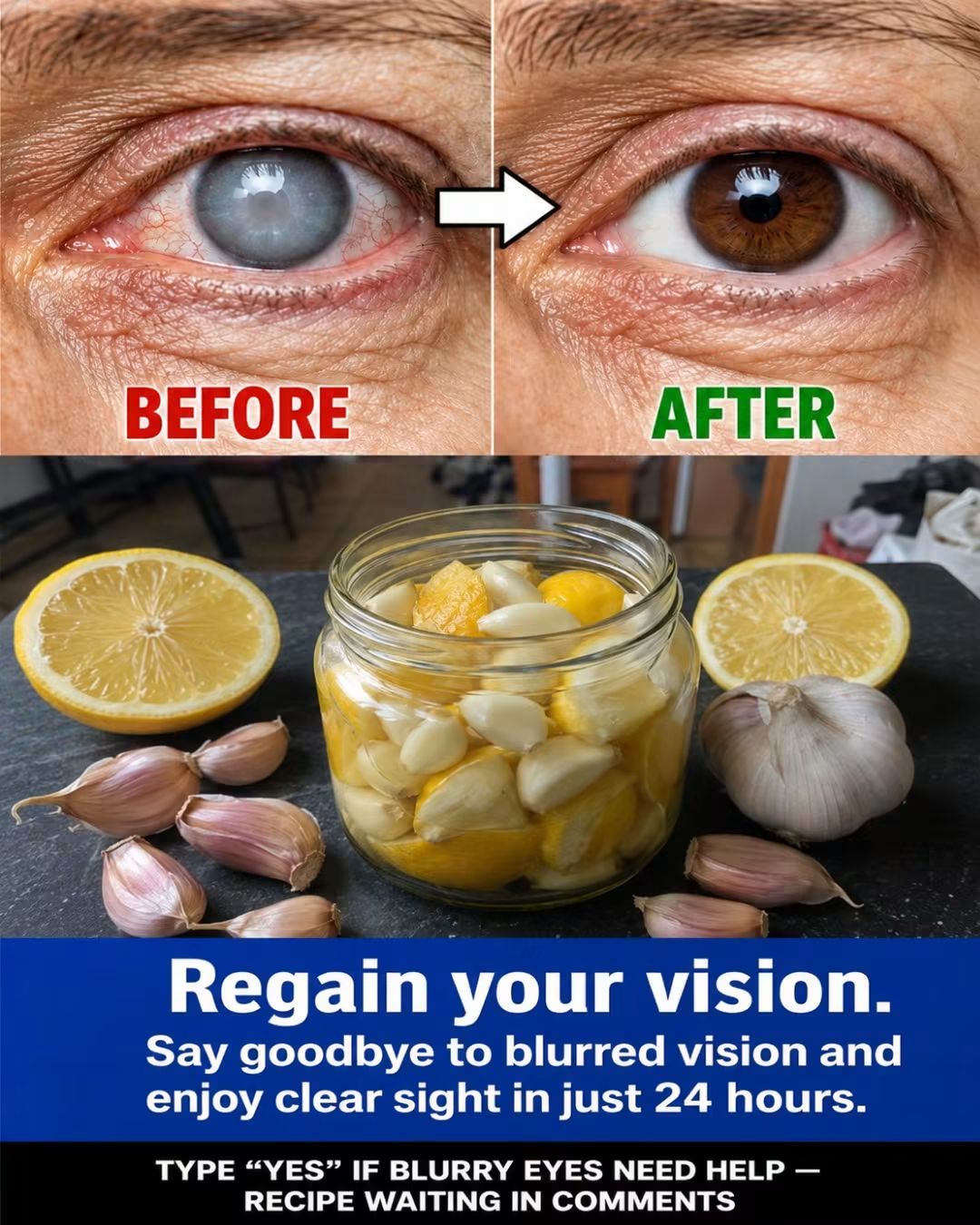
MenuThat Milky Film Covering Your Eyes Has a Cause — Here Is What Garlic and Lemon Really DoThat pale, milky haze sitting over the eye is not a “normal aging tax” you have to accept in silence. It steals contrast, turns headlights into glare, and makes familiar faces look washed out. Social posts then promise a kitchen jar of garlic and lemon will wipe the film away in 24 hours. The honest path starts with what that film actually is, what food can and cannot do for the lens of the eye, and the simple jar recipe people keep asking about — plus the part most viral posts leave out until the end.What That Milky Film on the Eye Usually IsThe viral photos almost always show a cloudy pupil. That look is often a cataract: proteins in the eye’s natural lens clump together and scatter light. The lens sits behind the colored iris. It is not a surface smear you can wipe off with a cloth.Sometimes the complaint is different. A greasy or filmy feeling on the surface of the eye can come from dry eye, meibomian gland issues, allergies, or leftover makeup. Those problems live on the tear film, not inside the lens.That distinction matters. A kitchen infusion cannot reach the lens the way surgery does. Putting kitchen liquids into the eye is unsafe. The jar below is food, not an eye drop.Why the “24-Hour Clear Eyes” Claim Spreads So FastBlurry vision is frightening. A before-and-after photo plus a countdown (“in just 24 hours”) short-circuits caution. Engagement posts then ask you to type YES so a recipe appears in the comments.Here is the part those posts skip.Cataract change is structural. Large human reviews of antioxidant vitamin pills — vitamin C, vitamin E, beta-carotene — found they did not prevent age-related cataract or slow it in a meaningful way.Animal and lab work on garlic extracts is more interesting, and it is also limited. In rat models, garlic extract delayed chemically induced or diabetic-style lens clouding and supported antioxidant enzymes in the lens. Those studies used extracts, injections, or controlled lab conditions — not a jar on the kitchen counter and not human cataracts overnight.The American Academy of Ophthalmology has stated there is no solid scientific evidence that herb mixes restore eyesight or reverse degenerative eye disease. A diet rich in plants, fish, and whole foods still supports overall health, including the eyes. That is not the same as a 24-hour reset.But that is not the whole story.What Garlic and Lemon Actually Bring to the TableGarlic and lemon are ordinary foods with well-described compounds. They belong in a kitchen. They do not belong in the eye.Garlic contains organosulfur compounds such as allicin (formed when a clove is crushed). Reviews of nutraceuticals list garlic among dietary sources studied for antioxidant and antiglycation activity in laboratory cataract models. That is early-stage science, not a clinical protocol.Lemon supplies vitamin C and citrus flavonoids such as rutin. Vitamin C is concentrated in the fluid in front of the lens. Food sources of vitamin C fit a healthy pattern. High-dose vitamin C pills have not been shown to clear an existing cataract, and very high supplemental doses are not a DIY eye treatment.The useful frame is this:
That Milky Film Covering Your Eyes Has a Cause — Here Is What Garlic and Lemon Really Do