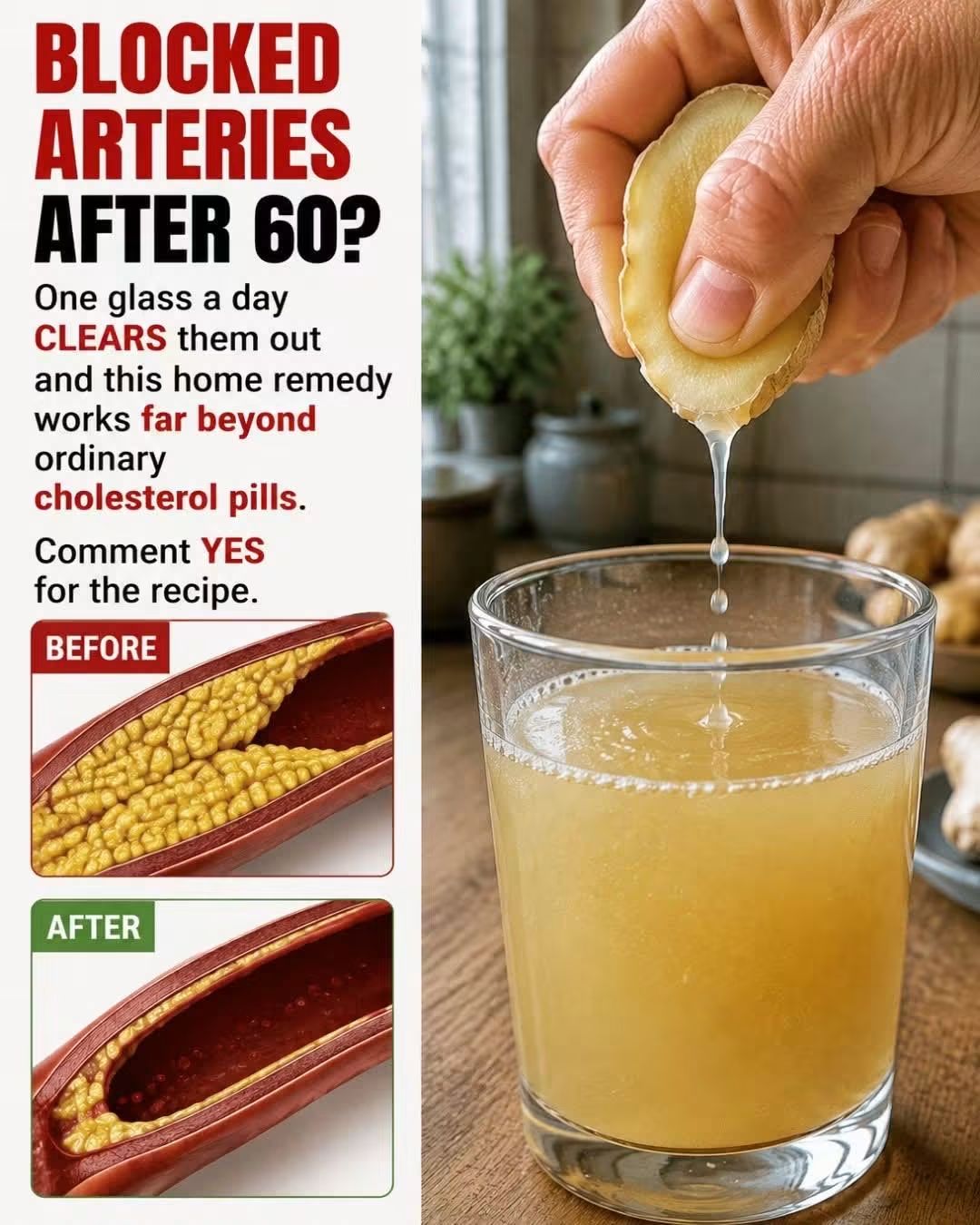
After 60, phrases like “blocked arteries,” “poor circulation,” and “plaque buildup” can sound frightening.August 30, 2026 by hicham That fear is exactly why so many online videos promise a simple solution:Drink one glass every morning and clear your arteries naturally.Recipes vary. Some use lemon and ginger. Others combine garlic, turmeric, apple cider vinegar, or beet juice.These ingredients can fit into a heart-healthy diet.But none of them has been proven to physically scrub plaque out of an artery.Atherosclerosis is a disease in which cholesterol and other substances accumulate within artery walls, forming plaque that can narrow the artery and increase the risk of heart attack, stroke, and peripheral artery disease. (www.heart.org)The encouraging part is that atherosclerosis is not something you are powerless against.Current medical guidance emphasizes controlling cholesterol, blood pressure, diabetes, smoking, physical inactivity, excess weight when relevant, and other cardiovascular risk factors. In some people, intensive risk-factor treatment can stabilize plaque and may even lead to partial regression over time. (NHLBI, NIH)So instead of a miracle artery-cleaning drink, this guide will give you something more useful:A simple daily beverage that can fit into a heart-conscious routine—plus the strategies that actually make the biggest difference after 60.Important: No homemade drink should replace prescribed cholesterol, blood-pressure, diabetes, antiplatelet, or other cardiovascular medication.❤️ First: What Does “Blocked Arteries” Actually Mean?The medical term is often atherosclerosis.Over many years, cholesterol and other materials can accumulate inside the artery wall.Plaque can contain:CholesterolFatty substancesCalciumCellular materialFibrous tissueAs plaque grows, an artery may become narrower and less flexible.But narrowing isn’t the only danger.Plaque can also become unstable.If a plaque ruptures, a blood clot can form rapidly and obstruct blood flow.Depending on where that happens, the result may be:Heart attackStrokeAcute limb ischemiaOther cardiovascular emergenciesThat’s why cardiovascular prevention isn’t simply about “opening the pipe.”The goal is also to stabilize plaque and prevent dangerous clot formation.🥤 So What Is the “One Glass”?A reasonable heart-conscious drink can be very simple.Lemon-Ginger WaterYou Will Need1 cup water2–3 thin slices fresh gingerA squeeze of fresh lemonOptional: a few mint leavesSteep the ginger in warm water for several minutes.Add lemon once it has cooled slightly.Drink it with or around a meal if you enjoy it.That’s it.No concentrated garlic shot.No spoonfuls of vinegar.No enormous dose of turmeric.And no promise that it will dissolve plaque.🍋 Why Lemon?Lemon provides:Vitamin CCitrateFlavonoidsFlavor without much sodium or added sugarReplacing sugary drinks with lemon-flavored water can be a useful habit.But lemon juice doesn’t travel through your bloodstream and dissolve cholesterol deposits.Your digestive system processes it long before its components reach your arteries.So lemon water may support a healthier dietary pattern.It does not work like a pipe cleaner.🫚 Why Ginger?Ginger contains biologically active compounds including gingerols and shogaols.Researchers have studied ginger in relation to:Oxidative stressInflammatory pathwaysGlucose metabolismCardiovascular markersThat’s interesting.But the evidence doesn’t support describing ginger tea as an artery-unclogging treatment.Use ginger because it’s a flavorful plant food—not because someone promised it can replace a statin or cardiac procedure.🧄 What About Garlic?Garlic deserves a little more attention because it’s often promoted specifically for arteries.Garlic contains sulfur-containing compounds and has been studied for possible effects on:Blood pressureCholesterolOther cardiovascular markersBut even if a food modestly influences a risk factor, that’s very different from physically removing established plaque.Think of the difference this way:Lowering future riskPossible through diet, medication, exercise, smoking cessation, and risk-factor control.Dissolving an existing severe blockage with garlic waterNot established.Garlic belongs in the kitchen.It isn’t a substitute for angioplasty.🧪 What Actually Happens to Plaque When Treatment Works?Plaque isn’t necessarily static.Appropriate treatment can change its behavior.Strong cholesterol reduction—particularly lowering LDL cholesterol—can help:Slow additional plaque formationStabilize existing plaqueReduce cardiovascular eventsThe NHLBI notes that in some people, heart-healthy living combined with medications that achieve very low LDL levels can stabilize plaques and, over longer periods, lead to some plaque regression. (NHLBI, NIH)Notice the timeline:Months to years—not one morning drink.📊 Viral Claim vs. RealityViral Claim More Accurate AnswerOne drink clears arteries NoPlaque can sometimes regress with intensive treatment Yes, in some peopleLowering LDL matters Very muchGinger and garlic can fit into a heart-healthy diet YesLemon dissolves cholesterol plaque NoExercise improves cardiovascular risk factors YesSmoking damages cardiovascular health YesSevere blockages sometimes need procedures YesThat last point matters.Lifestyle is powerful.But severe disease may require more.💊 Why LDL Cholesterol Matters So MuchLDL particles contribute to the development of atherosclerotic plaque.That’s why current cardiovascular guidance places major emphasis on reducing exposure to atherogenic lipoproteins over a person’s lifetime. The 2026 ACC/AHA dyslipidemia guideline emphasizes earlier identification and treatment of cholesterol-related risk. (professional.heart.org)For some people, lifestyle changes may be enough.For others, medications may include:StatinsEzetimibePCSK9-targeting therapiesOther lipid-lowering treatmentsThe appropriate treatment depends on individual cardiovascular risk.💊 What Statins Actually DoStatins don’t “scrape” plaque out of your arteries.They primarily reduce cholesterol production and lower LDL.This can:Slow plaque progressionHelp stabilize plaqueReduce heart-attack riskReduce stroke riskFor someone with established atherosclerotic cardiovascular disease, these effects can be far more important than whether a smoothie contains ginger or turmeric.Don’t stop cholesterol medication because an online recipe claims to work naturally.🩸 Blood Pressure Is Just as ImportantHigh blood pressure places additional stress on artery walls.Over time, uncontrolled hypertension contributes to cardiovascular disease.That’s why artery protection also involves keeping blood pressure appropriately controlled.Helpful habits may include:Limiting excess sodiumRegular physical activityMaintaining a healthy weight when relevantGetting adequate sleepTaking prescribed medication consistentlyA morning drink can’t compensate for uncontrolled blood pressure throughout the rest of the day.🍬 Don’t Ignore Blood SugarDiabetes significantly increases cardiovascular risk.High blood glucose over time can damage blood vessels and interact with many of the processes that drive cardiovascular disease.After 60, protecting the arteries often means protecting multiple systems at once:Blood sugar + blood pressure + cholesterol + body weight + physical activity + smoking status.Trying to isolate everything into one “artery-cleaning ingredient” misses the bigger picture.🚶 The Daily Habit That May Matter More Than the DrinkIf your healthcare professional says exercise is safe for you, regular physical activity can improve several cardiovascular risk factors.Current NHLBI guidance recommends regular activity as part of atherosclerosis treatment and notes that physical activity can help improve cholesterol, blood pressure, weight, and related risk factors. (NHLBI, NIH)For many adults, a realistic starting habit is:A short walk after meals.It doesn’t need to become an exhausting workout.Consistency matters.🏃 How Much Exercise?General guidance for adults often targets approximately:150 minutes per week of moderate-intensity activityor75 minutes per week of vigorous activitydepending on health and ability. (NHLBI, NIH)After 60, strength training is also useful for:Muscle maintenanceMobilityGlucose controlFunctional independenceBut someone with known cardiovascular disease should ask a clinician what level of exercise is appropriate.🥗 What Should You Actually Eat?Instead of searching for one artery-cleaning drink, build most meals around foods associated with cardiovascular health.That usually means more:VegetablesWhole fruitsWhole grainsBeans and lentilsNuts and seedsFishUnsaturated fatsand less:Highly processed foodExcess sodiumAdded sugarLarge amounts of saturated fatTrans fatHeart-healthy eating patterns such as DASH emphasize fruits, vegetables, whole grains, and limits on excess saturated fat, salt, and added sugar. (NHLBI, NIH)🫒 Olive OilOlive oil is a useful source of unsaturated fat.Use it in reasonable amounts for:VegetablesSalad dressingsBeansFishWhole grainsIt doesn’t dissolve plaque on contact.Its value comes from what happens when it replaces less heart-friendly fat choices as part of an overall healthy eating pattern.🐟 Fatty FishFatty fish such as:SalmonSardinesTroutMackerelprovide omega-3 fatty acids.Fish can fit into a cardiovascular-friendly eating pattern.Again, the concept is dietary pattern—not instant arterial cleansing.A salmon dinner tonight doesn’t reverse decades of atherosclerosis tomorrow morning.🌾 Fiber Is UnderratedSoluble fiber can contribute to cholesterol management.Foods containing useful amounts include:OatsBarleyBeansLentilsCertain fruitsA bowl of oatmeal may look less exciting than a viral garlic detox.But boring, repeatable habits often outperform dramatic remedies.🥜 Nuts and SeedsUnsalted nuts and seeds can provide:Unsaturated fatsFiberPlant proteinMicronutrientsKeep portions reasonable because they’re calorie-dense.Choose unsalted versions when possible.🥤 What About Beet Juice?Beets contain nitrate, which the body can convert through pathways that support nitric oxide production.This has generated interest in beetroot juice and blood-pressure responses.But improved blood-vessel function isn’t the same thing as removing plaque.Beet juice may influence vascular physiology.It doesn’t mechanically clear an obstructed artery.And people taking blood-pressure medication should remember that combining several blood-pressure-lowering strategies can sometimes contribute to dizziness.🍎 What About Apple Cider Vinegar?Vinegar has been studied in relation to certain metabolic effects, particularly glucose response around meals.But there’s no credible evidence that apple cider vinegar melts arterial plaque.Large amounts can cause:Esophageal irritationStomach discomfortTooth enamel erosionIt may also interact with some medications.If you enjoy vinegar, use it as salad dressing.There’s no need to take daily shots.🌿 What About Turmeric?Curcumin and other turmeric compounds are widely studied.But turmeric has the same limitation as the other ingredients:Interesting biological activity doesn’t equal proven plaque removal.Using turmeric while cooking vegetables is perfectly reasonable.Taking huge supplement doses to “clean arteries” is a different matter and can create medication or health-condition concerns.🚫 Don’t Start Aspirin Because You’re Over 60This is especially important.People sometimes combine an artery-cleaning drink with a daily aspirin “to thin the blood.”Don’t do this without medical guidance.NHLBI notes that low-dose aspirin is not recommended for most people simply as a general preventive strategy, particularly because bleeding risk matters and becomes especially relevant in older adults. (NHLBI, NIH)Aspirin may be appropriate for certain people with established cardiovascular disease.That’s a medical decision.🚬 If You Smoke, This Is Bigger Than the DrinkSmoking accelerates cardiovascular damage and increases the risk of heart attack and stroke.Stopping smoking is one of the most powerful cardiovascular interventions available.NHLBI specifically includes quitting smoking and avoiding secondhand smoke among core strategies for preventing and treating atherosclerosis. (NHLBI, NIH)You can’t neutralize cigarettes with lemon water.😴 Sleep Matters TooAdults generally need adequate sleep.Poor sleep can interact with:Blood pressureGlucose regulationAppetiteWeightStress hormonesNHLBI includes healthy sleep—generally around 7–9 hours for adults—as part of heart-healthy living. (NHLBI, NIH)Again, cardiovascular protection is a system.Not a drink.⚖️ Weight and Cardiovascular RiskFor people with overweight or obesity, modest weight loss can improve several cardiovascular risk factors.That may include improvements in:Blood pressureGlucoseCholesterolThe goal doesn’t have to be dramatic.Small sustainable changes can matter.Crash diets aren’t necessary.🧂 Watch the SodiumHigh-sodium diets can worsen blood pressure and fluid retention.Large sources commonly include:Fast foodProcessed meatsPackaged soupsFrozen mealsChipsRestaurant foodBottled saucesOne of the advantages of lemon, garlic, ginger, herbs, pepper, and spices is that they can make food flavorful with less reliance on salt.That’s a genuinely useful reason to use them.🥣 A Heart-Friendly Daily DrinkIf you’d like one simple drink to make part of your routine, try this:Gentle Lemon-Ginger InfusionIngredients1 cup warm water2 thin slices fresh gingerJuice from ¼ lemonOptional mintDirectionsSteep ginger for 5–10 minutes.Add lemon.Drink without added sugar.Why drink it?Because it can:Replace sugary beveragesAdd fluidProvide flavorFit comfortably into a healthy eating patternWhy NOT drink it?Don’t drink it because someone told you it will unclog your coronary arteries.It won’t.🍽️ A Better Breakfast After 60Pair the drink with something more substantial.For example:OatmealAdd:BerriesWalnutsCinnamonThis provides fiber and nutrient-dense foods.Or try:Whole-grain toast + avocado + vegetablesThe exact diet should fit your health needs, medications, and calorie requirements.📅 A Simple Heart-Health DayMorningWater or lemon-ginger infusion.Fiber-rich breakfast.MiddayVegetables + beans or another appropriate protein + whole grains.AfternoonWalk or other appropriate activity.DinnerFish or another healthy protein source with vegetables.EveningAvoid smoking, excessive alcohol, and late heavy meals.Throughout the dayTake prescribed medication as directed.That’s far closer to an evidence-based artery plan than a detox recipe.🩺 How Do Doctors Know Whether an Artery Is Blocked?Depending on your symptoms and medical history, tests may include:Blood testsElectrocardiogramStress testingUltrasoundCT imagingCoronary calcium scoring in selected peopleCoronary CT angiographyInvasive coronary angiographyThe appropriate test depends on why you’re being evaluated.Don’t diagnose “blocked arteries” based only on tiredness or cold hands.🫀 When Is a Stent Needed?Severe coronary narrowing or acute blockage may require a procedure called percutaneous coronary intervention (PCI).A catheter is guided to the affected artery, and a balloon may be inflated to open the narrowed area.A stent may then be placed to help keep the artery open.NHLBI identifies PCI and stent placement among procedures used for dangerous plaque-related narrowing or blockage. (NHLBI, NIH)No juice produces that mechanical effect.🫀 What About Bypass Surgery?For some people with severe coronary disease, coronary artery bypass grafting (CABG) may be recommended.A healthy vessel is used to create another route for blood around a severe blockage.Again, whether someone needs medication, PCI, bypass surgery, or lifestyle management depends on the location and severity of disease.There isn’t one treatment for everyone.🦵 Blocked Arteries Can Affect the Legs TooAtherosclerosis isn’t limited to the heart.It can affect leg arteries, causing peripheral artery disease (PAD).Possible symptoms include:Leg pain when walkingCrampingWeaknessPoorly healing woundsCold feetColor changesStatins, exercise programs, blood-pressure management, smoking cessation, and sometimes procedures are used in PAD management. (NHLBI, NIH)Don’t assume leg symptoms simply mean you need a circulation tea.🚫 8 “Artery Cleaning” Mistakes After 601. Stopping Statins for a Herbal DrinkA drink isn’t a substitute for evidence-based treatment.2. Taking Daily Aspirin Without Asking a DoctorBleeding risk matters.3. Drinking Concentrated Garlic ShotsThey can irritate the stomach and may matter for bleeding risk.4. Believing Vinegar Dissolves PlaqueIt doesn’t.5. Ignoring High Blood PressureThis is a major cardiovascular risk factor.6. Continuing to SmokeNo antioxidant beverage cancels smoking-related cardiovascular damage.7. Focusing Only on FoodActivity, sleep, medication, blood pressure, diabetes, and smoking status also matter.8. Ignoring Chest SymptomsA heart attack isn’t a situation for lemon water.🚨 Heart Attack Warning SignsPossible heart-attack symptoms can include:Chest pressure, squeezing, fullness, or painDiscomfort spreading to the arm, shoulder, jaw, neck, or backShortness of breathCold sweatingNauseaLightheadednessUnusual weaknessSymptoms aren’t identical in everyone.If you think you or someone else may be having a heart attack, seek emergency medical help immediately. NHLBI emphasizes that every minute matters when symptoms of heart attack or stroke occur. (NHLBI, NIH)Don’t drive around searching for ginger.🧠 Stroke Warning SignsThink about sudden:Facial droopingArm weaknessDifficulty speakingLoss of balanceVision changesSevere neurological symptomsStroke treatment is extremely time-sensitive.Call emergency services.❓ Frequently Asked QuestionsCan one drink clear blocked arteries?No. There is no drink proven to rapidly clear established arterial plaque.Can plaque ever shrink?In some people, aggressive management of cardiovascular risk factors—particularly major LDL reduction combined with healthy living—can stabilize plaques and may produce regression over time. (NHLBI, NIH)Is lemon water good for the heart?Unsweetened lemon water can replace sugary drinks and fit into a healthy diet, but it doesn’t dissolve arterial plaque.Does garlic unclog arteries?Garlic has been studied for certain cardiovascular risk factors, but it isn’t a treatment that physically opens a severely blocked artery.Is ginger good for circulation?Ginger contains active compounds and can fit into a heart-healthy diet, but evidence doesn’t support calling ginger tea an artery-clearing treatment.Does apple cider vinegar clear arteries?No convincing evidence shows that vinegar dissolves arterial plaque.Can exercise open arteries?Exercise improves multiple cardiovascular risk factors and is part of atherosclerosis treatment, but it doesn’t mean every severe obstruction will disappear. Some people still need medication or procedures. (NHLBI, NIH)Should everyone over 60 take aspirin?No. Aspirin can cause bleeding and isn’t appropriate for routine use in everyone over 60. Discuss it with your healthcare professional. (NHLBI, NIH)What should I ask my doctor to check?Depending on your history, useful areas may include blood pressure, cholesterol including LDL, diabetes screening, cardiovascular risk assessment, and whether additional testing is appropriate.What is the most important number for artery health?There’s no single number. LDL cholesterol, blood pressure, blood glucose, smoking status, and overall cardiovascular risk all matter.⭐ The Bottom LineIf someone promises that one glass every morning will clear blocked arteries after 60, be skeptical.Atherosclerotic plaque is a complex disease of the artery wall.Lemon, ginger, garlic, turmeric, beetroot, and other foods can all be incorporated into a nutritious cardiovascular diet.But they do not function like microscopic drain cleaner.What actually changes cardiovascular risk is much more powerful:Lowering harmful cholesterol when necessary, controlling blood pressure and diabetes, avoiding smoking, staying physically active, eating a heart-healthy diet, maintaining a healthy weight when appropriate, getting adequate sleep, and taking prescribed medication correctly.For some people with dangerous arterial narrowing, medical procedures such as angioplasty, stenting, or bypass surgery are necessary. (NHLBI, NIH)So enjoy that glass of unsweetened lemon-ginger water if you like it.Let it replace soda.Let it encourage better hydration.Let it become part of a healthier breakfast.But don’t expect it to wash decades of plaque from your arteries.After 60, the habit that changes everything isn’t one glass—it is consistently controlling the factors that allow atherosclerosis to progress.CategoriesUncategorizedThe Unexpected Natural Fix for Kidney Stones? Your Stonebreaker Plant GuideOver 60? 10 Low-Potassium Foods That May Fit a Kidney-Friendly DietLeave a CommentCommentNameName *EmailEmail *WebsiteWebsiteSave my name, email, and website in this browser for the next time I comment.
After 60, phrases like “blocked arteries,” “poor circulation,” and “plaque buildup” can sound frightening.