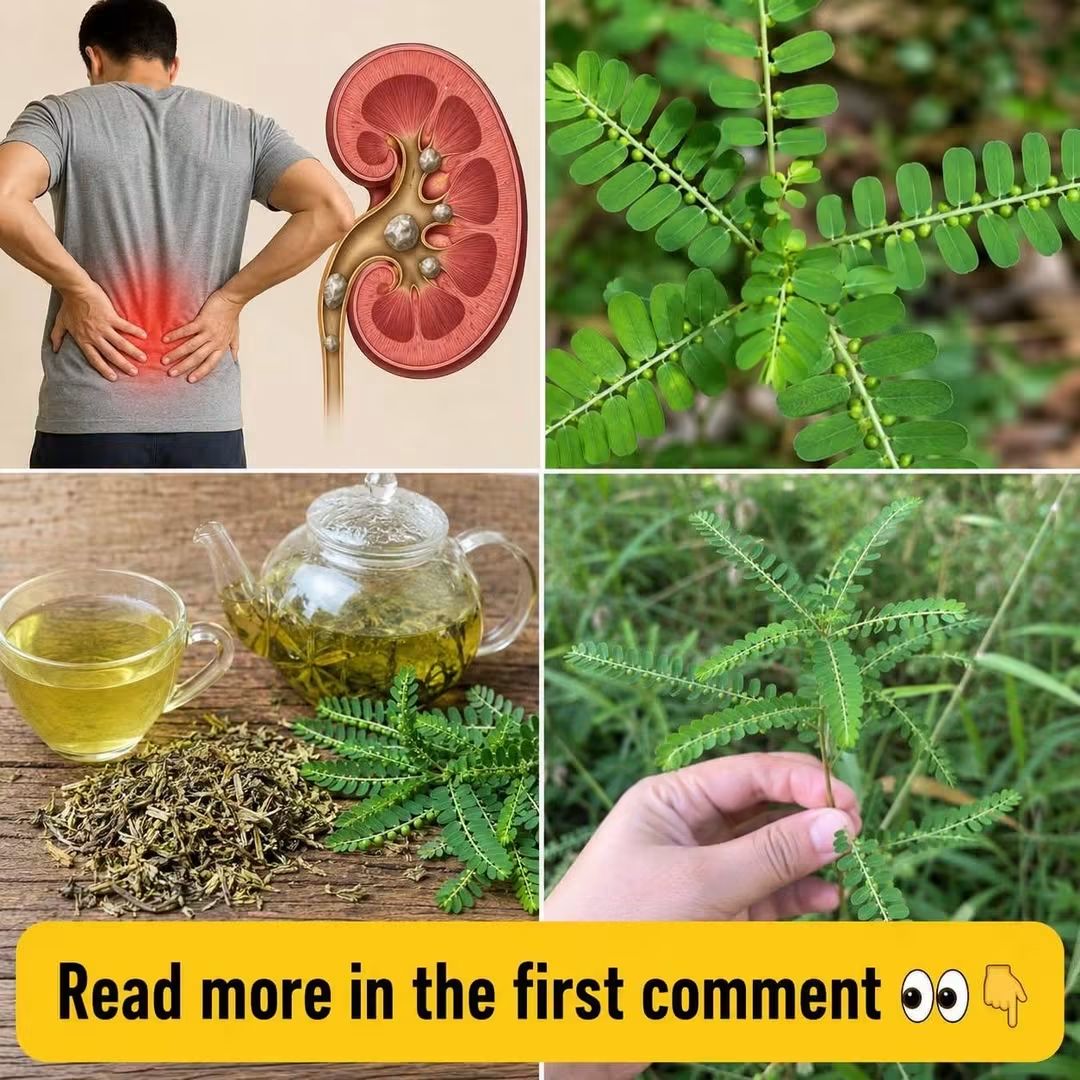
The Unexpected Natural Fix for Kidney Stones? Your Stonebreaker Plant GuideAugust 30, 2026 by hicham A plant with a nickname like “stonebreaker” almost sounds designed for kidney-stone headlines.The herb usually being discussed is Phyllanthus niruri, sometimes sold under names such as chanca piedra or “stone breaker.” It has a long history of traditional use for urinary and kidney complaints, and researchers have investigated whether it might influence some of the biological processes involved in kidney-stone formation.That makes it scientifically interesting.But the popular claim that drinking stonebreaker tea can simply break a kidney stone apart and flush it out goes beyond what current evidence can establish.Kidney stones vary enormously in size, location, and composition. A tiny stone that can pass naturally is very different from a stone obstructing urine flow or causing infection.And an obstructed, infected urinary system can become an emergency.So before trying any herbal remedy, it’s worth understanding what stonebreaker may potentially do, what it hasn’t been proven to do, and what actually helps prevent recurrent kidney stones.Important: Stonebreaker is not a proven replacement for medical evaluation or kidney-stone treatment. Severe pain with fever, chills, persistent vomiting, or difficulty passing urine requires prompt medical attention.🌿 What Is the “Stonebreaker” Plant?The name most commonly refers to plants in the Phyllanthus genus, particularly Phyllanthus niruri.It grows in tropical and subtropical regions and has been used traditionally in parts of:South AmericaAsiaIndiaOther tropical regionsDepending on the region, you may hear names including:Chanca piedraStone breakerGale of the windQuebra-pedraThe nickname itself has helped fuel its modern popularity.But a traditional name isn’t clinical proof that the herb physically breaks stones.🪨 What Is a Kidney Stone?Urine contains dissolved minerals and other substances.Under certain conditions, some of these materials can become concentrated enough to form crystals.Those crystals may grow into stones.Common types include:Calcium oxalate stonesThe most common category.Calcium phosphate stonesAnother calcium-containing type.Uric acid stonesAssociated with acidic urine and certain metabolic factors.Struvite stonesUsually related to urinary infections involving particular bacteria.Cystine stonesAssociated with a rare inherited disorder called cystinuria.This matters because there isn’t one universal kidney-stone treatment.The stone type changes the prevention strategy.🔬 Why Are Researchers Interested in Phyllanthus?Researchers have explored whether compounds in Phyllanthus might influence processes involved in stone formation.Experimental research has investigated possible effects involving:Crystal formationCrystal aggregationCrystal attachment within the urinary tractUrinary chemistrySmall human studies have also explored changes in urinary parameters among people with kidney stones.These findings are interesting enough to justify further research.But they’re not equivalent to demonstrating that a cup of tea reliably dissolves an existing kidney stone.📊 Stonebreaker Claims vs. What We Actually KnowPopular Claim More Accurate InterpretationStonebreaker shatters kidney stones Not establishedPhyllanthus has been studied for kidney stones YesIt may influence urinary or crystallization-related factors Possibly; research is limitedIt dissolves every stone type NoIt replaces medical treatment NoSmall stones sometimes pass naturally YesLarge or obstructing stones may need medical treatment YesPreventing another stone depends partly on stone type YesThe nickname is much stronger than the evidence.💥 Does Stonebreaker Literally Break Stones?Probably not in the way advertisements suggest.Imagine a hard kidney stone sitting inside the urinary tract.An herbal tea doesn’t travel through the body like a chemical hammer and smash the stone into pieces.If Phyllanthus proves useful, its role is more likely to involve urinary chemistry and crystal-related processes rather than mechanically crushing stones.That’s an important distinction.☕ What About Stonebreaker Tea?Commercial chanca piedra teas are widely available in some countries.The problem is that herbal products aren’t necessarily standardized.Different products may contain:Different Phyllanthus speciesDifferent plant partsDifferent concentrationsDifferent extraction methodsThat makes it difficult to translate research into a universal homemade dose.A stronger tea isn’t automatically more effective.And “natural” doesn’t guarantee safety.⚠️ Don’t Confuse Herbal Tea With Proven Stone TreatmentMedical treatment depends on:Stone sizeStone locationSymptomsInfectionKidney functionStone compositionSome small stones can pass spontaneously.Others don’t.A stone that becomes lodged in the ureter can obstruct urine flowing from the kidney to the bladder.That’s why simply waiting at home while drinking herbal tea can occasionally become dangerous.📏 Stone Size MattersGenerally, smaller stones have a better chance of passing naturally than larger stones.But size isn’t the only factor.Location matters too.So do:AnatomySwellingPrevious stonesInfectionDegree of obstructionImaging such as ultrasound or CT may be used to determine what’s actually happening.Without imaging, you may not even know whether your pain is being caused by a kidney stone.💧 The Most Important Everyday “Natural” StrategyFor many people with recurrent stones, one of the most important preventive measures is remarkably ordinary:Appropriate fluid intake.Producing more urine can dilute stone-forming substances.For many stone-formers, clinicians emphasize drinking enough fluid to maintain substantial urine output throughout the day.But this isn’t permission to force enormous quantities of water rapidly.People with:Heart failureAdvanced kidney diseaseCertain electrolyte disordersPhysician-directed fluid restrictionsmay need individualized advice.Appropriate hydration—not a water challenge—is the goal.🍋 What About Lemon Water?Lemon is far less exotic than stonebreaker, but it contains something relevant:Citrate.Urinary citrate can help inhibit certain calcium-stone processes.That’s one reason citrate is important in kidney-stone prevention.For some people, clinicians prescribe potassium citrate when medically appropriate.Citrus beverages may contribute dietary citrate, but lemon water isn’t equivalent to prescription potassium citrate and doesn’t automatically dissolve an existing stone.Also watch what gets added to the drink.A giant lemonade containing substantial added sugar isn’t necessarily an ideal kidney-health strategy.🧂 Sodium Is a Major Piece People MissMany people obsess over oxalate while ignoring sodium.High sodium intake can increase urinary calcium excretion in some people, which can contribute to calcium-stone risk.Major sodium sources include:Fast foodProcessed meatInstant noodlesChipsRestaurant mealsPackaged soupsFrozen convenience mealsSalty saucesReducing excessive sodium may be much more useful than searching for an exotic stone-dissolving herb.🥛 Don’t Automatically Eliminate CalciumThis sounds counterintuitive.If someone has a calcium oxalate stone, they may immediately think:“Calcium caused my stone, so I need to stop eating calcium.”That can be the wrong strategy.Adequate dietary calcium consumed with meals can bind some oxalate in the digestive tract, reducing how much oxalate is absorbed.Severely restricting dietary calcium may therefore be counterproductive for some calcium oxalate stone-formers.Supplemental calcium is a separate question and should be individualized.🌱 What About Oxalate?Oxalate is naturally present in many foods.High-oxalate foods can include items such as:SpinachRhubarbBeetsCertain nutsSome other plant foodsBut a kidney-stone diet shouldn’t automatically become:“Never eat vegetables again.”If you form calcium oxalate stones, your clinician or dietitian can help determine whether reducing particularly high oxalate exposures is useful.Pairing oxalate-containing foods with an appropriate dietary calcium source at the same meal may also be relevant.🥤 The “Green Detox” ProblemA green smoothie can look incredibly healthy.But imagine concentrating:Large handfuls of spinachAlmond productsBeetOther high-oxalate ingredientsinto one drink every morning.For someone susceptible to calcium oxalate stones, repeatedly consuming concentrated high-oxalate smoothies may be less helpful than expected.Healthy ingredients still require context.🍖 Animal Protein Can MatterHigh intake of certain animal proteins may influence urinary chemistry in ways relevant to some stone types.That doesn’t mean everyone with kidney stones must become vegetarian.It means portions and overall dietary pattern matter.A balanced pattern can include:VegetablesWhole fruitsLegumesWhole grainsAppropriate proteinAppropriate dietary calciumrather than revolving around huge meat portions at every meal.🍬 What About Sugar?High intake of added sugar and sugar-sweetened beverages isn’t a useful kidney-stone prevention strategy.Replace sugary drinks more often with:WaterAppropriate citrus-infused waterOther beverages consistent with your medical needsDon’t turn a kidney-stone prevention drink into dessert.🍺 Does Beer Flush Kidney Stones?This is another persistent myth.Some people believe beer increases urination and therefore “pushes stones out.”Alcohol isn’t a kidney-stone treatment.It can contribute to dehydration depending on circumstances and can interact with medications.Don’t use alcohol as a diuretic strategy for passing a stone.🌿 What About Apple Cider Vinegar?Apple cider vinegar is often promoted as a stone dissolver.Claims usually say its acidity “melts calcium stones.”That’s an oversimplification of chemistry and human physiology.Drinking vinegar doesn’t directly bathe a kidney stone in concentrated acid.The substance is diluted, absorbed, and metabolized before urinary excretion.There’s insufficient evidence to recommend apple cider vinegar as a reliable kidney-stone treatment.Large or repeated amounts can also irritate the digestive tract and damage tooth enamel.🌱 What About Parsley Tea?Parsley tea is another traditional urinary remedy.Like stonebreaker, it is often promoted as a diuretic.But producing more urine isn’t automatically the same as treating an obstruction.If a stone is blocking urine flow, simply taking herbs intended to increase urination doesn’t solve the underlying mechanical problem.💊 Can Medication Help a Stone Pass?Sometimes.Depending on the stone’s size and location, clinicians may prescribe medications intended to help relax the ureter and facilitate passage in selected patients.Pain management may also be necessary.Other stones require procedures.Potential treatments include:Shock-wave lithotripsyUreteroscopyLaser fragmentationOther procedures depending on the situationThis is actual controlled stone fragmentation—not something a cup of herbal tea reliably accomplishes.🧪 Stone Analysis Can Change EverythingIf you pass a kidney stone, don’t automatically throw it away.Your healthcare team may want it analyzed.Knowing whether it’s:Calcium oxalateCalcium phosphateUric acidStruviteCystinecan dramatically improve prevention advice.People with recurrent stones may also undergo 24-hour urine testing.That can evaluate factors such as:Urine volumeCalciumOxalateCitrateUric acidSodiumUrine pHNow your prevention strategy can be based on your own biology rather than an internet list.🍽️ A Simple Stone-Conscious DayFor someone whose clinician hasn’t prescribed special dietary restrictions, a general approach might look like this:BreakfastOatmeal with fruit and an appropriate dietary calcium source.LunchVegetables, whole grains, and an appropriate protein source.AfternoonWater spread throughout the day rather than drinking huge amounts at once.DinnerVegetables, beans or appropriately portioned protein, and a minimally processed side.FlavorUse:LemonGarlicHerbsPepperwhile limiting excessive sodium.Stonebreaker tea, if your healthcare professional considers it appropriate, should be viewed as optional—not the foundation.💊 Who Should Be Particularly Careful With Stonebreaker Supplements?Talk with a healthcare professional before using concentrated Phyllanthus products if you:Take several medicationsUse diabetes medicationUse blood-pressure medicationHave chronic kidney diseaseHave significant liver diseaseAre pregnant or breastfeedingAre preparing for surgeryHave recurrent or complicated kidney stonesHerbal products can have biological effects.That’s exactly why interactions deserve attention.🚫 8 Kidney-Stone Mistakes to Avoid1. Waiting Too Long With Severe PainA persistent obstruction can damage kidney function.2. Ignoring FeverA urinary infection combined with obstruction can become dangerous.3. Assuming Stonebreaker Literally Breaks StonesThat hasn’t been established.4. Drinking Gallons of Water QuicklyMore isn’t automatically safer.5. Eliminating All Dietary CalciumThis can be counterproductive for some calcium oxalate stone-formers.6. Focusing Only on OxalateSodium, fluid intake, calcium, protein, urine chemistry, and stone type also matter.7. Taking Multiple Herbal DiureticsThis can complicate hydration, electrolytes, and medication management.8. Never Finding Out Your Stone TypeWithout analysis, you may be trying to prevent the wrong problem.🚨 When Kidney Stones Become an EmergencyA kidney stone isn’t always something to manage at home.Seek prompt medical attention for stone-like pain accompanied by:FeverChillsPersistent vomitingInability to keep fluids downDifficulty or inability to urinateSevere weaknessConfusionRapidly worsening symptomsAn obstructed urinary system combined with infection is particularly concerning.Don’t spend another night increasing the strength of your herbal tea.Get evaluated.🔁 Why Kidney Stones Keep Coming BackHaving one kidney stone increases the possibility of experiencing another.That’s why prevention becomes important.The most effective strategy depends on the reason you’re forming stones.For one person, the major issue may be:Low urine volume.For another:High urinary calcium.Another may have:Low citrate.Another:High uric acid.That’s why there can’t be one universal “stonebreaker diet.”🧠 What Actually Helps Prevent Another Stone?Depending on stone type and medical history, prevention may involve:Adequate fluid intakeLower sodium intakeAppropriate dietary calciumModerating certain animal proteinsAdjusting oxalate intake when relevantIncreasing citrate when appropriateWeight and metabolic-health managementPrescription medication in selected casesThis isn’t as exciting as a miracle plant.But it’s much more useful.❓ Frequently Asked QuestionsDoes stonebreaker really break kidney stones?Phyllanthus has been studied for possible effects related to urinary chemistry and crystal formation, but evidence doesn’t establish it as a reliable method for physically breaking existing kidney stones.What is chanca piedra?It’s a common name used for certain Phyllanthus plants traditionally used for urinary and other health complaints.Can I drink stonebreaker tea every day?There’s no universally established kidney-stone dose or daily requirement. Product composition also varies. Discuss regular medicinal use with a healthcare professional, particularly if you take medications.Can kidney stones dissolve naturally?It depends on the stone type. Some uric acid stones, for example, can sometimes be medically dissolved by appropriately changing urine chemistry. Common calcium stones generally aren’t simply dissolved by drinking herbal tea.Does lemon water help?Citrus can contribute citrate, which is relevant to prevention of certain stones. But lemon water isn’t guaranteed to dissolve an existing stone.Should I avoid calcium if I have calcium stones?Not automatically. Adequate dietary calcium may actually be important for people who form calcium oxalate stones.Should I avoid spinach?If you form calcium oxalate stones and have high urinary oxalate, reducing very high-oxalate exposures may be useful. Your overall diet should be individualized.Can drinking lots of water push out a stone?Appropriate hydration is important, but forcing excessive water doesn’t guarantee passage and isn’t appropriate for everyone.How do I know what type of stone I have?Stone analysis is one of the most direct methods. Blood tests, urine testing, imaging, and 24-hour urine studies may provide additional information.When should I go to the hospital?Severe stone-like pain with fever, chills, persistent vomiting, inability to urinate, severe weakness, or rapidly worsening symptoms requires prompt medical evaluation.⭐ The Bottom LineStonebreaker—often referring to Phyllanthus niruri or chanca piedra—is a genuinely interesting medicinal plant.Researchers have explored whether it may influence urinary chemistry and processes involved in kidney-stone formation.But its nickname shouldn’t be mistaken for proof.There’s currently insufficient evidence to say that drinking stonebreaker tea reliably shatters existing kidney stones, dissolves every type of stone, or replaces conventional treatment.For preventing recurrent stones, the more important strategy is discovering why you form them.That may mean evaluating:Stone composition, urine volume, calcium, oxalate, citrate, uric acid, sodium, urine pH, diet, medications, and other health conditions.Then prevention can be personalized.For many stone-formers, appropriate hydration and avoiding excessive sodium are far more important than finding an exotic herbal remedy.Stonebreaker may remain an interesting subject of research.But when a stone is causing obstruction, infection, or severe symptoms, the plant’s nickname doesn’t matter.The safest “natural fix” begins with knowing your stone type—and knowing when a stone needs medical treatment instead of another cup of tea.CategoriesUncategorizedWhat 8 Everyday Kidney-Friendly Foods Can You Add When Creatinine Results Keep You Up at Night?After 60, phrases like “blocked arteries,” “poor circulation,” and “plaque buildup” can sound frightening.Leave a CommentCommentNameName *Email
The Unexpected Natural Fix for Kidney Stones? Your Stonebreaker Plant Guide