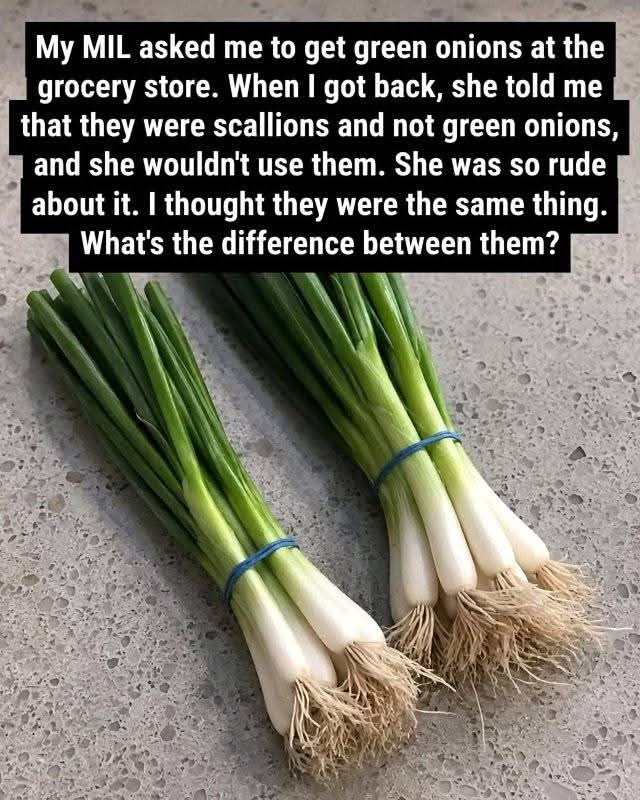
Gentle Guide to Choosing the Right AlliumOh, my dear friend, I know that moment of standing in the grocery aisle, looking at the bunches of green tops and wondering, “Which one do I need?” It’s easy to get confused when the names seem so similar. Let’s take a gentle, clear look at the differences between green onions, scallions, spring onions, and chives, so you can choose the right ingredient with confidence.Green Onions and Scallions: Often InterchangeableThe short answer is that green onions and scallions are often the same thing. In many grocery stores, the names are used interchangeably to describe the same vegetable: a young onion that has been harvested before the bulb has fully formed.Key Characteristics:Bulb Size: A very small, slender, white bulb that is about the same width as the stem.Flavor: Mild and fresh, with a gentle onion bite that is not too pungent.Usage: The entire onion—both the white bulb and the green stalks—is edible and can be used raw or cooked.Spring Onions: A Mature, More Robust RelativeSpring onions are similar to green onions and scallions, but they are allowed to grow a little longer, resulting in a noticeably larger bulb.Key Characteristics:Bulb Size: A rounder, more pronounced bulb that can be the size of a small shallot or golf ball.Flavor: Slightly stronger and more pungent than a green onion, but still milder than a mature onion.Usage: Both the bulb and the green tops are edible. The bulb has a slightly more intense flavor and can be used in cooking, while the greens are great raw or lightly cooked.Chives: A Different Plant AltogetherChives are not just a smaller version of a green onion; they are a completely different plant species. They are part of the same allium family (which also includes garlic, onions, and leeks), but they are distinct.Key Characteristics:Appearance: Thin, delicate, hollow, grass-like leaves. They do not form a bulb.Flavor: A mild, delicate onion flavor that is much more subtle than green onions or scallions.Usage: They are almost always used raw or added at the very end of cooking, as their flavor is delicate and their texture wilts quickly. They are a classic garnish for baked potatoes, soups, and dips.Chive Flowers: The beautiful, edible purple flowers also have a mild onion flavor and can be used as a garnish.A Quick Reference GuideName Appearance Flavor Best Used ForGreen Onions / Scallions Slender white bulb, straight green stalks Mild, fresh onion flavor Raw in salads, as a garnish, or lightly cooked in stir-friesSpring Onions Noticeably larger, rounder bulb Slightly more pungent than green onions Sautéed, grilled, or roasted; the greens can be used rawChives Thin, hollow, grass-like leaves Delicate, subtle onion How to Store ThemAll of these fresh alliums should be stored in the refrigerator.Green Onions and Scallions: Store them in a plastic bag in the crisper drawer for up to a week. You can also keep them fresh by placing them in a jar with a small amount of water (like a bouquet) and covering the greens loosely with a plastic bag.Spring Onions: Store them in a plastic bag in the crisper drawer. The bulbs are more robust and will last a little longer.Chives: Wrap them in a slightly damp paper towel and place them in a plastic bag in the refrigerator. They are delicate and should be used within a few days.A Gentle ReminderThe allium family is wonderfully versatile and flavorful, and each member has a unique character. Understanding the differences allows you to use each one in the best possible way, bringing a fresh, bright flavor to your dishes.
Difference Between Green Onions, Scallions, Spring Onions and Chives