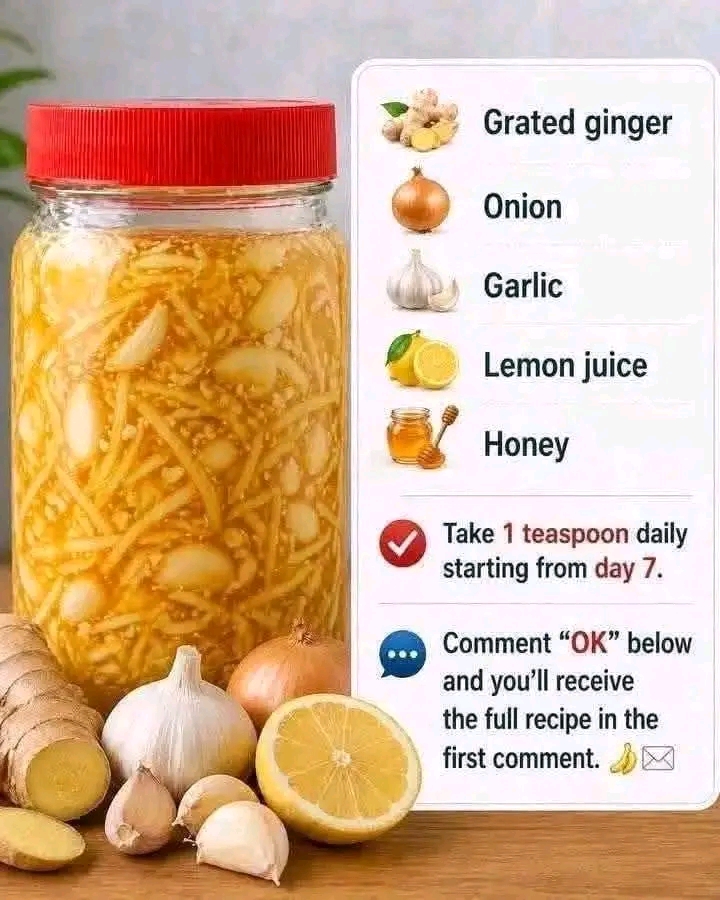
Ginger, onion, garlic, lemon, and honey are five ordinary kitchen ingredients that have been used in traditional home preparations for generations.Combine them in a jar, and you’ll often see the mixture described online as a powerful natural syrup capable of clearing the lungs, eliminating mucus, stopping coughs, boosting immunity, killing infections, and “detoxing” the body.The reality is less dramatic—but still useful.Of these ingredients, honey has the clearest evidence for helping soothe an acute cough, while ginger and warm liquids may feel comforting for an irritated throat. Lemon adds flavor and vitamin C, and garlic and onion contain interesting sulfur-containing plant compounds.What the mixture cannot reliably do is cure pneumonia, eliminate a bacterial infection, “clean” the lungs, replace antibiotics, or guarantee that a respiratory illness disappears.Used sensibly, however, a simple version can be an enjoyable soothing food-based syrup for some adults.The key is making it safely and knowing when a cough needs more than a kitchen remedy.Important: This syrup is not a cure for respiratory infections. It may also interact with medications or be inappropriate for certain people. Persistent or severe symptoms should be medically evaluated.🍯 What Is This Homemade Syrup?The basic preparation usually combines:Fresh gingerOnionGarlicLemonHoneyAfter the ingredients sit together, juices from the onion, lemon, ginger, and garlic mix with the honey and create a thinner, strongly flavored liquid.Some versions are taken by the spoonful.Others are diluted in warm water.Despite being called a “natural medicine,” it’s more accurate to think of it as a traditional food preparation.Each ingredient contributes something different.🍯 Ingredient #1: HoneyHoney is probably the most useful ingredient in this mixture when the goal is soothing a cough.Its thick texture coats the throat, and research has found that honey can help reduce cough symptoms in some people with acute upper respiratory infections.That’s very different from killing the infection itself.Honey may help with:Throat irritationCough comfortDry, scratchy throatMaking warm drinks more soothingHoney does NOT:Cure pneumoniaReplace antibioticsEliminate viruses from the body“Detox” the lungsAnd there is one major safety rule:Never give honey to a child younger than 12 months because of the risk of infant botulism.🫚 Ingredient #2: GingerGinger contains biologically active compounds including gingerols and shogaols.It’s been studied for several effects, particularly nausea and digestive symptoms.In a homemade cough preparation, ginger’s biggest practical contribution may simply be its warming flavor and the comfortable sensation it creates in the throat.Some laboratory research has explored ginger’s anti-inflammatory and antimicrobial properties.But laboratory effects shouldn’t automatically be interpreted as proof that drinking ginger syrup treats respiratory infections in humans.Ginger may be useful for:Adding warming flavorSupporting digestive comfortMaking a warm beverage enjoyableIt should not be described as an antibiotic replacement.🧄 Ingredient #3: GarlicGarlic has a particularly strong health reputation.When garlic is chopped or crushed, chemical reactions produce sulfur-containing compounds, including compounds associated with allicin formation.Researchers have studied garlic extensively.But there’s a big leap between saying:“Garlic contains biologically active compounds.”and saying:“Garlic syrup kills an infection inside your lungs.”The second claim isn’t established.Eating garlic as part of a balanced diet is reasonable.Using large concentrated amounts as medicine requires more caution.🧅 Ingredient #4: OnionOnions contain:FlavonoidsSulfur compoundsSmall amounts of several vitamins and mineralsThey’re nutritious vegetables.Traditional onion-and-honey syrups are used in various cultures for coughs.But onion hasn’t been proven to pull mucus out of the lungs or cure respiratory disease.The liquid that forms when chopped onion sits with honey is mostly the result of water moving out of the onion and mixing with the honey.It isn’t evidence that toxins or infection have been extracted.🍋 Ingredient #5: LemonLemon provides vitamin C and acidity.Its bright flavor also balances the sweetness of honey and the strong taste of garlic and onion.Vitamin C is essential for normal immune function.But consuming large amounts after becoming sick doesn’t instantly “supercharge” immunity.Lemon is best viewed as:A nutritious flavoring ingredient—not an infection treatment.📊 What Each Ingredient Can—and Can’t—Do
Ginger, Onion, Garlic, Lemon & Honey Natural Syrup: Potential Benefits, Risks & How to Make It Safely