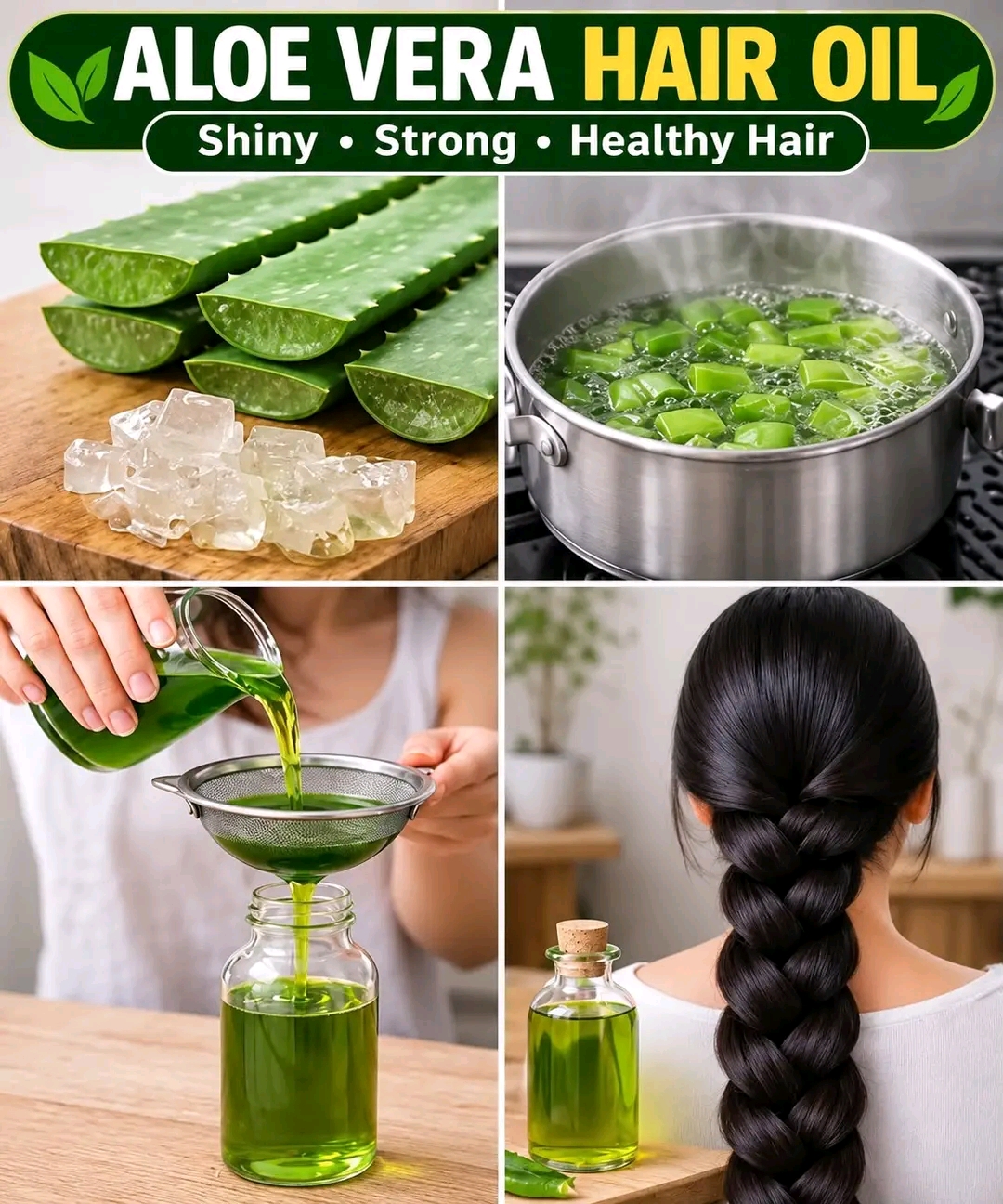
Aloe vera hair oil is often promoted as a natural solution for thinning hair, dryness, breakage, an itchy scalp, and slow hair growth.Aloe vera itself has a long history of topical use, while oils such as coconut, jojoba, or argan oil are commonly used to condition the hair and reduce a dry, rough appearance.But there is an important distinction:Making hair feel softer and healthier is not the same as medically regrowing lost hair.Current evidence does not establish aloe vera oil as a reliable treatment for pattern hair loss or other major forms of alopecia. The American Academy of Dermatology (AAD) emphasizes that successful treatment begins with identifying the cause of hair loss because different types require different approaches.⚠️ Important Safety NoteThis article is for general educational purposes and is not a substitute for diagnosis or treatment from a dermatologist or healthcare professional.Topical aloe gel is generally well tolerated, but NCCIH reports occasional reactions including burning, itching, rash, and eczema.Patch-test any new aloe or hair-oil mixture before applying it widely.Stop using it if you develop persistent burning, redness, swelling, itching, or worsening scalp irritation.Rapid hair loss, bald patches, scalp pain, significant scaling, scarring, or persistent thinning deserves professional evaluation rather than repeated home treatments.🌿 What Aloe Vera Can Realistically Do for HairThe strongest reason to use aloe vera in a hair routine is not that it magically activates dormant follicles.It can be used as a topical conditioning ingredient.Aloe-based products may help hair or scalp feel:Softer.More hydrated.Less dry.More comfortable.And easier to manage.Adding an appropriate cosmetic oil may also reduce the rough feeling of dry hair and improve shine.Those cosmetic effects can make hair look healthier and fuller, particularly when dryness and breakage are contributing to a thin appearance.That still does not mean new follicles are growing.🧴 Is “Aloe Vera Oil” Really Aloe Oil?Not usually.Aloe vera is primarily a water-rich plant gel rather than an oil-producing plant.Products called “aloe vera oil” are commonly made by infusing or combining aloe-derived ingredients with a carrier oil.Common carrier oils include:Coconut oil.Jojoba oil.Argan oil.Olive oil.Sunflower oil.The properties of the final product therefore depend heavily on what else is in the formula.💧 Aloe Gel vs. Hair OilThese products serve somewhat different purposes.Product Main practical roleAloe-based gel Lightweight scalp/hair conditioningHair oil Helps lubricate and soften dry hairAloe + carrier oil Conditioning combinationAloe hair mask Temporary softness/manageabilityMinoxidil Evidence-based treatment for certain hair-loss conditionsAloe oil for baldness Not established✨ Why Hair May Look Better After OilingA dry hair shaft can appear:Frizzy.Dull.Rough.Brittle.And thinner than it actually is.Conditioning products can coat and lubricate the strands, improving their appearance.AAD specifically recommends gentle shampooing and moisturizing conditioner for people experiencing thinning because fragile hair is easily damaged. Leave-in conditioner or detangler can also help reduce breakage, split ends, and frizz.So if an aloe-oil routine makes your hair appear smoother and fuller, the improvement may be coming from better conditioning and less breakage, rather than accelerated follicle growth.🌱 Does Aloe Vera Make Hair Grow Faster?This is where expectations need to remain realistic.Aloe vera has interesting biological properties, and a recent systematic review of herbal hair-loss interventions included aloe among natural products being investigated. However, herbal studies vary considerably in their formulations and evidence quality, and this does not establish ordinary homemade aloe oil as a proven treatment for common pattern hair loss.There is currently much stronger clinical evidence for established hair-loss treatments such as minoxidil for appropriate patients.Aloe should therefore be viewed primarily as a hair/scalp-care ingredient, not a guaranteed regrowth treatment.🧬 Why the Cause of Hair Loss MattersThere isn’t one disease called “hair loss.”Hair can thin because of:Genetics.Hormonal pattern hair loss.Alopecia areata.Tight hairstyles.Major illness.High fever.Surgery.Stress-related shedding.Nutritional deficiencies.Thyroid disorders.Scalp disease.Certain medications.And other causes.AAD stresses that determining the actual cause is key because many forms of hair loss can be treated or further loss may be prevented once the cause is known.Aloe oil cannot address all these causes.👩 What About Female Pattern Hair Loss?Female pattern hair loss commonly produces:A widening part.Gradual thinning over the top of the scalp.A thinner ponytail.Or increasingly visible scalp.Aloe oil has not been established as a treatment for this condition.AAD identifies topical minoxidil as the most-recommended treatment for female pattern hair loss. Products containing 2% or 5% minoxidil are approved for treating it, although results require patience and treatment isn’t appropriate for everyone.It generally takes around 6–12 months of continuous use to determine how well minoxidil works.👨 What About Male Pattern Baldness?The same limitation applies.Male pattern hair loss commonly produces:A receding hairline.Thinning at the temples.A bald spot around the crown.Or progressive thinning over the scalp.AAD lists topical minoxidil among FDA-approved treatments for male pattern hair loss and notes that prescription finasteride is another option for appropriate men.Aloe vera oil is not an equivalent substitute.🧴 A Simple Aloe Hair-Oil RoutineIf your goal is softer, better-conditioned hair, keep the routine simple.Use:1 tablespoon cosmetic-grade carrier oilsuch as jojoba, coconut, or argan oil,plusa small amount of commercially prepared aloe-based hair product according to its directions.An even simpler approach is to avoid mixing them in storage altogether.Apply an aloe-based product first if desired, then use a few drops of oil mainly on the lengths and ends.This avoids creating a homemade water-and-oil mixture that you store for long periods.⚠️ Fresh Aloe Gel + Oil Has a ProblemFresh aloe contains a great deal of water.Oil and water do not simply become a stable, safely preserved cosmetic because they are stirred together.A homemade jar containing fresh aloe may spoil or become contaminated during storage if it has not been properly formulated and preserved.For that reason, avoid making a huge batch and storing it for weeks.A commercially formulated aloe hair product is usually the more practical option for repeated use.🌙 Simple Nighttime Routine for Dry HairFor dry or fragile hair:Gently detangle first.Use a small amount of oil.Concentrate mainly on dry lengths and ends.Avoid saturating the scalp unnecessarily.Wear the hair loosely.Avoid tight braids, ponytails, or buns.Wash according to your hair type.Use conditioner afterward.AAD recommends gentle hair care because thinning hair is particularly fragile and easily damaged.⏱️ How Long Should Oil Stay on the Hair?More time does not necessarily mean more benefit.For many people, applying a modest amount before washing is sufficient.You could try approximately:30–60 minutes before shampooing.There is no need to leave a heavy layer of oil on the scalp for several days.If your scalp becomes itchy, greasy, inflamed, or develops bumps, stop the routine and reassess.🔥 Avoid Very Hot OilHeating oil until it is very hot is unnecessary.AAD specifically advises people with thinning hair to avoid hot-oil treatments because heat can further damage fragile hair.Room-temperature or mildly warm cosmetic oil is sufficient.If it feels hot on your skin, it is too hot for your scalp.🌿 Can You Use Aloe Directly From the Plant?Aloe products can come from different parts of the leaf.The clear inner gel is different from the yellowish latex closer to the outer portion of the leaf.NCCIH notes that aloe products may be made from the inner gel, latex, or whole leaf, and these forms do not have identical safety profiles.For routine scalp use, a properly formulated commercial product intended for hair or skin is easier to use consistently and safely than experimenting with whole aloe leaves.🚫 Aloe Latex Is Not the GoalDo not confuse the clear inner aloe gel with aloe latex.Aloe latex is the yellowish material found beneath the leaf’s outer surface.It is not necessary for hair care.In particular, oral aloe latex has significant safety concerns and can cause abdominal pain, cramps, and diarrhea. NCCIH notes that the FDA required aloe latex to be removed from over-the-counter laxative products because of inadequate safety data.For a hair routine, there is no reason to consume aloe.🥥 What About Coconut Oil?Coconut oil can work well as a conditioning oil for some hair types.Its purpose in this routine should be straightforward:Helping dry hair feel smoother.Improving lubrication.Reducing a rough appearance.It should not be marketed as a cure for baldness.People with very fine hair may find heavy coconut-oil application makes hair appear flat or greasy, so smaller amounts may work better.🌰 What About Jojoba Oil?Jojoba is another common cosmetic option.It is relatively lightweight and can be useful when someone dislikes the heavier feel of coconut or olive oil.Again, its role is primarily cosmetic conditioning.There is no good evidence that jojoba mixed with aloe can reverse genetic hair loss.🌿 What About Rosemary Oil?Rosemary frequently appears in homemade hair-growth recipes.There is some research interest in herbal treatments for hair loss, including rosemary, but herbal evidence remains much less established than standard therapies and varies considerably among formulations and studies.Essential oils can also irritate the scalp.Do not assume that adding more essential oils makes an aloe treatment stronger or safer.🧅 What About Onion Juice?Onion juice is another viral hair-loss remedy.It is not necessary for a basic aloe conditioning routine.It can:Smell strongly.Irritate sensitive skin.Cause redness or burning.And complicate a routine unnecessarily.If the goal is simply healthier-looking hair, gentle care is usually more useful than repeatedly irritating the scalp with aggressive homemade mixtures.💊 What About Biotin?Biotin supplements are heavily marketed for thinning hair.But supplements should not automatically be the next step.AAD cautions that excessive intake of certain nutrients can actually worsen hair loss.If nutritional deficiency is suspected, testing and targeted correction are more sensible than taking large doses of multiple “hair vitamins.”🥚 Nutrition Still MattersHair is built largely from protein, so an adequate overall diet matters.Useful foods may include:Eggs.Fish.Beans.Lentils.Greek yogurt.Poultry.Nuts.Seeds.Whole grains.Vegetables.And whole fruits.However, eating extra protein or vitamins does not automatically reverse hereditary hair loss.Nutrition is one part of the picture.🎀 Tight Hairstyles Can Undo Your ProgressYou can apply the most expensive hair oil in the world and still damage your hair if it is constantly under tension.Repeated tight:Braids.Ponytails.Buns.Extensions.Or other pulling hairstylescan contribute to traction alopecia.AAD warns that hairstyles that repeatedly pull on the hair can lead to hair loss, and early changes are important because longstanding traction can become difficult to reverse.If a hairstyle hurts, feels tight, or causes stinging, loosen it.📊 What Aloe Hair Oil Can and Cannot DoClaim What to expectHelp dry hair feel softer ReasonableImprove shine PossibleReduce rough appearance PossibleHelp with manageability ReasonableReduce breakage through gentler conditioning PossibleCure genetic baldness NoRegrow every lost follicle NoReverse scarring alopecia NoReplace minoxidil for pattern hair loss NoWork in 3 days NoCause irritation in some people Yes📅 A Simple 30-Day Hair-Care ExperimentInstead of expecting overnight regrowth, track something measurable.On day 1:Take clear photos of your hairline, part, temples, and crown.Use the same lighting.Use the same hairstyle.Then for 30 days:Use gentle shampoo.Condition after washing.Use a small amount of aloe-based conditioner or gel if tolerated.Apply a small amount of oil to dry lengths and ends.Avoid extremely hot tools.Avoid tight hairstyles.Avoid aggressive brushing.Eat adequate protein.Do not introduce five different hair remedies simultaneously.At day 30, repeat the photos under the same conditions.Look primarily for:Less breakage.Improved softness.Better manageability.Less dryness.And improved appearance.True hair-regrowth treatments generally require much longer than a month to judge properly. AAD notes that minoxidil, for example, may require 6–12 months to assess results.🚫 10 Common Aloe Hair-Oil Mistakes1. Expecting aloe to cure baldness.Evidence does not establish it as a replacement for proven hair-loss treatments.2. Storing homemade fresh aloe-and-oil mixtures for weeks.3. Applying extremely hot oil.AAD recommends avoiding hot-oil treatments on fragile thinning hair.4. Using huge amounts of oil.5. Assuming scalp burning means the treatment is working.Topical aloe can occasionally cause burning, itching, rash, or eczema.6. Adding multiple essential oils at once.7. Ignoring tight hairstyles.8. Taking random megadose hair supplements.9. Treating every type of hair loss the same way.10. Waiting months while rapidly progressive hair loss gets worse.🚨 When Hair Loss Needs Professional EvaluationConsider seeing a dermatologist if you notice:Sudden heavy shedding.A rapidly widening part.A receding hairline.Round or patchy bald areas.Loss of eyebrows or eyelashes.Scalp pain, burning, or tenderness.Significant redness or scaling.Pus, sores, or crusting.Shiny or scar-like bald areas.Hair loss accompanied by unexplained fatigue, weight changes, or other new symptoms.AAD emphasizes that hair loss has many possible causes and that earlier diagnosis can improve the chance of successful treatment or prevention of additional loss.❓ Frequently Asked QuestionsDoes aloe vera oil grow hair?There is not enough strong clinical evidence to say that ordinary aloe vera hair oil reliably regrows hair. It may be useful primarily for conditioning dry hair and scalp.Can aloe make hair look thicker?Conditioned hair may appear smoother, shinier, and healthier. Reducing breakage may also help preserve visible length and fullness. That is different from creating new follicles.Can I use aloe vera oil every day?Daily use may be too heavy for some hair types. Start with a small amount once or twice weekly and adjust according to how your scalp and hair respond.Should I apply it to my scalp or hair?If your goal is dryness and breakage, concentrate primarily on the hair lengths and ends. Scalp application should be light, particularly if you’re prone to irritation or buildup.Can aloe stop genetic hair loss?It has not been established as a treatment for androgenetic alopecia. Evidence-based options such as minoxidil are used for appropriate patients.How long does real hair regrowth take?Hair grows slowly. Even established treatments such as minoxidil can require around 6–12 months before results can be properly evaluated.Can aloe irritate my scalp?Yes. Although topical aloe is generally well tolerated, NCCIH reports occasional burning, itching, rash, and eczema.Should I take aloe orally for hair growth?There is no established reason to consume aloe to regrow hair, and oral aloe—particularly aloe latex—has additional safety concerns.Is aloe better than minoxidil?Current evidence does not support aloe as an equivalent replacement for minoxidil in conditions where minoxidil is indicated.What’s the best way to use aloe for healthier-looking hair?Use a properly formulated aloe hair product as part of a gentle routine, condition regularly, minimize heat and tension, and use a small amount of oil on dry lengths if needed.⭐ The Bottom LineAloe vera hair oil can be a useful part of a gentle conditioning routine, especially for hair that feels dry, rough, brittle, or difficult to manage.Aloe-based products may help provide a soothing, moisturizing feel, while a suitable carrier oil can improve softness and shine.But keep the claim realistic.Aloe vera hair oil has not been proven to:reverse genetic baldness,restore every lost follicle,cure alopecia,regrow hair in a few days,or replace established medical treatments for hair loss.AAD emphasizes that hair loss has many different causes and that finding the cause is central to choosing effective treatment. For appropriate types of hair loss, treatments such as topical minoxidil have substantially stronger clinical evidence.Use aloe oil for what it does best:Conditioning, softness, shine, and a gentler hair-care routine.And if your hair is genuinely thinning rather than simply dry or breaking, investigate the cause instead of relying on increasingly strong homemade remedies.For external use • Patch-test first • Stop if burning, itching, or rash develops • Avoid very hot oil • Aloe is not a proven cure for hair loss.
Aloe Vera Hair Oil: Potential Benefits for Dry Hair & Scalp — Risks and What to Know First